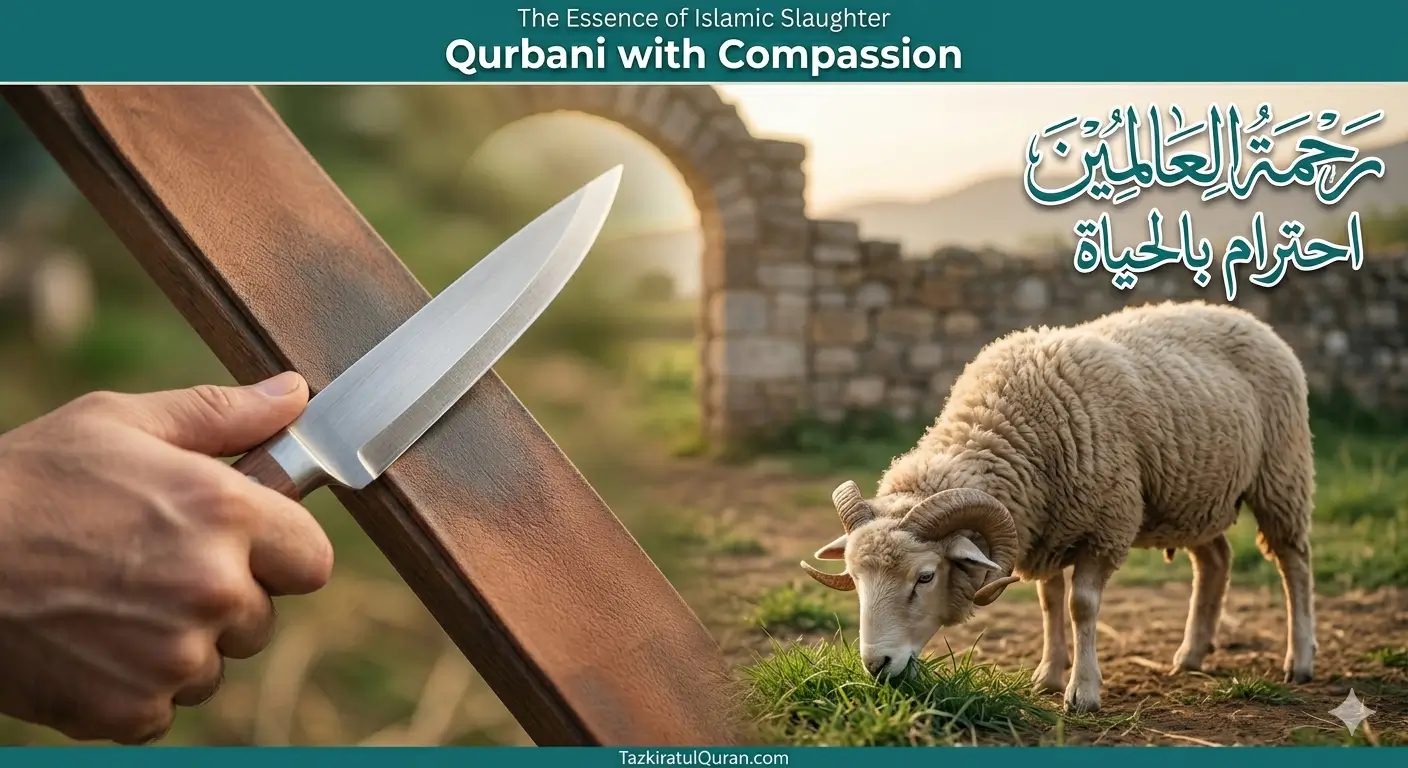
The Importance of Udhiyah (Qurbani) in Islam: Rules, Wisdom, and Common Mistakes
Introduction: Reviving One of Islam’s Greatest Symbols
Every year, during the blessed days of Dhul-Hijjah, millions of Muslims around the world prepare to perform one of the most powerful acts of worship in Islam: Udhiyah (Qurbani). Yet for many families today, Qurbani has slowly become more of a cultural routine than a deeply understood act of devotion.
As Islamic teachers and students of knowledge, we often notice that many Muslims know how to sacrifice, but fewer truly understand why this worship holds such a high status in Islam.
At Tazkiratul Quran, we believe that learning the wisdom behind Islamic practices revives sincerity, strengthens iman, and connects hearts back to Allah سبحانه وتعالى.
In this detailed guide, we will explore:
- The meaning and importance of Udhiyah
- Whether Qurbani is obligatory or Sunnah
- The conditions of a valid sacrifice
- Common mistakes Muslims make during Eid al-Adha
- The wisdom behind sacrificing locally
- The spiritual lessons of Qurbani
“So pray to your Lord and sacrifice.” — Surah Al-Kawthar (108:2)
1. What is Udhiyah (Qurbani)?
Udhiyah, commonly called Qurbani, refers to the animal sacrificed during the days of Eid al-Adha for the sake of Allah سبحانه وتعالى.
This sacred act revives the legacy of Prophet Ibrahim عليه السلام, who demonstrated complete submission to Allah when he was commanded to sacrifice his beloved son.
Allah replaced the sacrifice with a ram and made this act an everlasting symbol for the Muslim Ummah.
Today, Muslims sacrifice animals not merely for meat, but as an act of worship, gratitude, obedience, and remembrance of Allah.
Learn more authentic Islamic teachings on our Islamic Blog.
2. Is Qurbani Obligatory in Islam?
Scholars have differed regarding the ruling of Udhiyah.
The majority of scholars consider it a highly emphasized Sunnah (Sunnah Mu’akkadah), while some great scholars such as Imam Abu Hanifah رحمه الله and Shaykh al-Islam Ibn Taymiyyah رحمه الله considered it obligatory upon those who are financially capable.
The Prophet ﷺ consistently performed Qurbani every year, which shows its immense importance.
For Muslims who are able to afford it, abandoning Qurbani without reason means missing out on tremendous reward and a beloved Sunnah of the Messenger of Allah ﷺ.
3. Which Animals Can Be Used for Qurbani?
Islam only allows sacrifice from specific types of livestock:
- Camels
- Cows and bulls
- Goats
- Sheep
Even if another animal is expensive or valuable, it will not count as a valid Udhiyah because Allah and His Messenger ﷺ specifically legislated these animals.
Minimum Age Requirements
The sacrificed animal must also meet the required age:
- Sheep: At least 6 months old
- Goat: At least 1 year old
- Cow: At least 2 years old
- Camel: At least 5 years old
The Prophet ﷺ said:
“Do not slaughter except a mature animal, unless it becomes difficult for you, then slaughter a young sheep.”
4. Animals That Are Not Valid for Qurbani
Islam teaches excellence and mercy in worship. Therefore, defective animals cannot be used for sacrifice.
The Prophet ﷺ specifically prohibited sacrificing animals that are:
- Clearly one-eyed
- Obviously sick
- Clearly lame
- Extremely weak or thin
Similarly, animals that are blind, severely injured, dying, or mutilated should not be sacrificed.
The healthier and more beautiful the animal is, the better the sacrifice becomes in the sight of Allah.
At the same time, Islam is balanced and practical. Minor defects — such as a small cut in the ear or horn — do not invalidate the Qurbani.
5. The Correct Time for Qurbani
Timing is extremely important in Islam.
The time for slaughter begins:
- After the Eid prayer on the 10th of Dhul-Hijjah
- And continues until sunset on the 13th of Dhul-Hijjah
If someone sacrifices before the Eid prayer, it does not count as Udhiyah.
The Prophet ﷺ clearly said:
“Whoever slaughtered before the prayer, it is only meat for his family.”
This shows that Qurbani is not simply slaughtering an animal — it is an act of worship connected to specific conditions and timings.
6. One Qurbani is Enough for an Entire Household
One of the forgotten Sunnahs today is that one sheep is sufficient for an entire household.
The Prophet Muhammad ﷺ sacrificed on behalf of himself and his family.
Unfortunately, modern culture sometimes turns Qurbani into competition:
- The husband wants a separate Qurbani
- The wife wants another
- The children each want their own
This was not the practice of the Prophet ﷺ or the Companions.
Islam encourages sincerity and moderation — not showing off or unnecessary extravagance.
7. Is It Better to Perform Qurbani Locally?
In recent years, many Muslims have started sending money abroad for Qurbani because it is cheaper in other countries.
While helping poor Muslims is a noble act, many scholars explained that the Sunnah is to perform the sacrifice in your own locality whenever possible.
Why Local Qurbani Matters
- It preserves the visible symbol of Islam in your community
- Children witness the Sunnah firsthand
- The family can eat from the meat, as encouraged in the Quran
- You personally mention Allah’s name during sacrifice
- You ensure the sacrifice is done correctly and on time
Allah says:
“Then eat from them and feed the poor and needy.” — Surah Al-Hajj (22:28)
When Qurbani disappears from neighborhoods and homes, an important Islamic symbol slowly fades away from society.
8. The Spiritual Meaning Behind Qurbani
The real purpose of Udhiyah is not meat, money, or culture.
Allah سبحانه وتعالى says:
“Neither their meat nor their blood reaches Allah, but what reaches Him is your piety.” — Surah Al-Hajj (22:37)
Qurbani teaches Muslims:
- Submission to Allah
- Sacrifice and sincerity
- Gratitude for blessings
- Helping the needy
- Reviving the Sunnah of Ibrahim عليه السلام
It is an act of worship that purifies the heart and strengthens taqwa.
9. Important Sunnahs During the First 10 Days of Dhul-Hijjah
If a Muslim intends to offer Qurbani, the Prophet ﷺ instructed them not to cut:
- Hair
- Nails
- Skin
From the beginning of Dhul-Hijjah until the sacrifice is completed.
These first ten days are among the greatest days of the year, filled with opportunities for worship, dhikr, fasting, dua, and charity.
Read more beneficial reminders on our Islamic Reminders Page.
10. Common Mistakes Muslims Make During Qurbani
1. Treating Qurbani as a cultural event only
Some people focus more on photos, social media posts, and showing expensive animals rather than sincerity for Allah.
2. Sacrificing unhealthy animals
Choosing the cheapest animal despite obvious defects goes against the spirit of excellence in worship.
3. Ignoring family involvement
Children should witness and understand the importance of this worship instead of seeing it as merely meat distribution.
4. Delaying the sacrifice beyond the proper days
Some people do not pay attention to the correct timing, which can invalidate the Qurbani.
11. The Beautiful Sunnah of Eating From Your Qurbani
One beautiful aspect of Eid al-Adha is sharing food with family, neighbors, and the poor.
The Prophet ﷺ himself ate from his sacrifice.
Qurbani strengthens:
- Family ties
- Community bonds
- Care for the poor
- Love and unity among Muslims
This is why Islam encourages Muslims not only to distribute the meat, but also to personally eat from it.
🌙 Learn Islam With Authentic Guidance
Explore Quran classes, Islamic reminders, and authentic Islamic articles at Tazkiratul Quran.
Conclusion: Reviving the Spirit of Sacrifice
Udhiyah is far more than a yearly ritual.
It is a symbol of faith, obedience, gratitude, and devotion to Allah سبحانه وتعالى.
In a world increasingly distracted by materialism and appearances, Qurbani reminds Muslims of sincerity, sacrifice, and submission to the Creator.
As parents, teachers, and believers, we should strive not only to perform Qurbani, but also to teach our families the wisdom and beauty behind it.
May Allah accept the sacrifices of all Muslims, forgive our shortcomings, and revive in our hearts the true spirit of Eid al-Adha.
Ameen.
Continue reading authentic Islamic content at TazkiratulQuran.com.